Tender-Flow: multi-agent public procurement
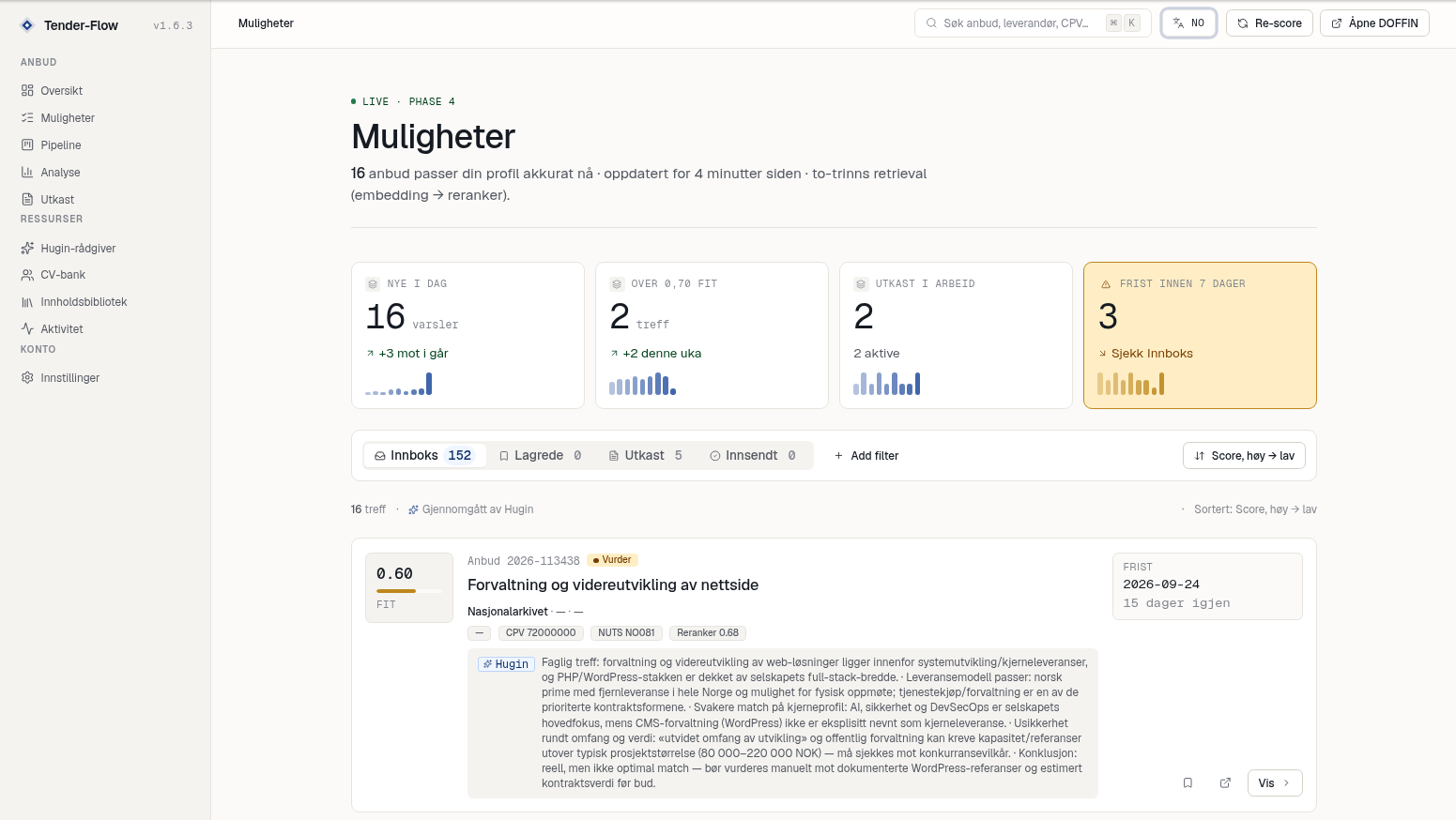
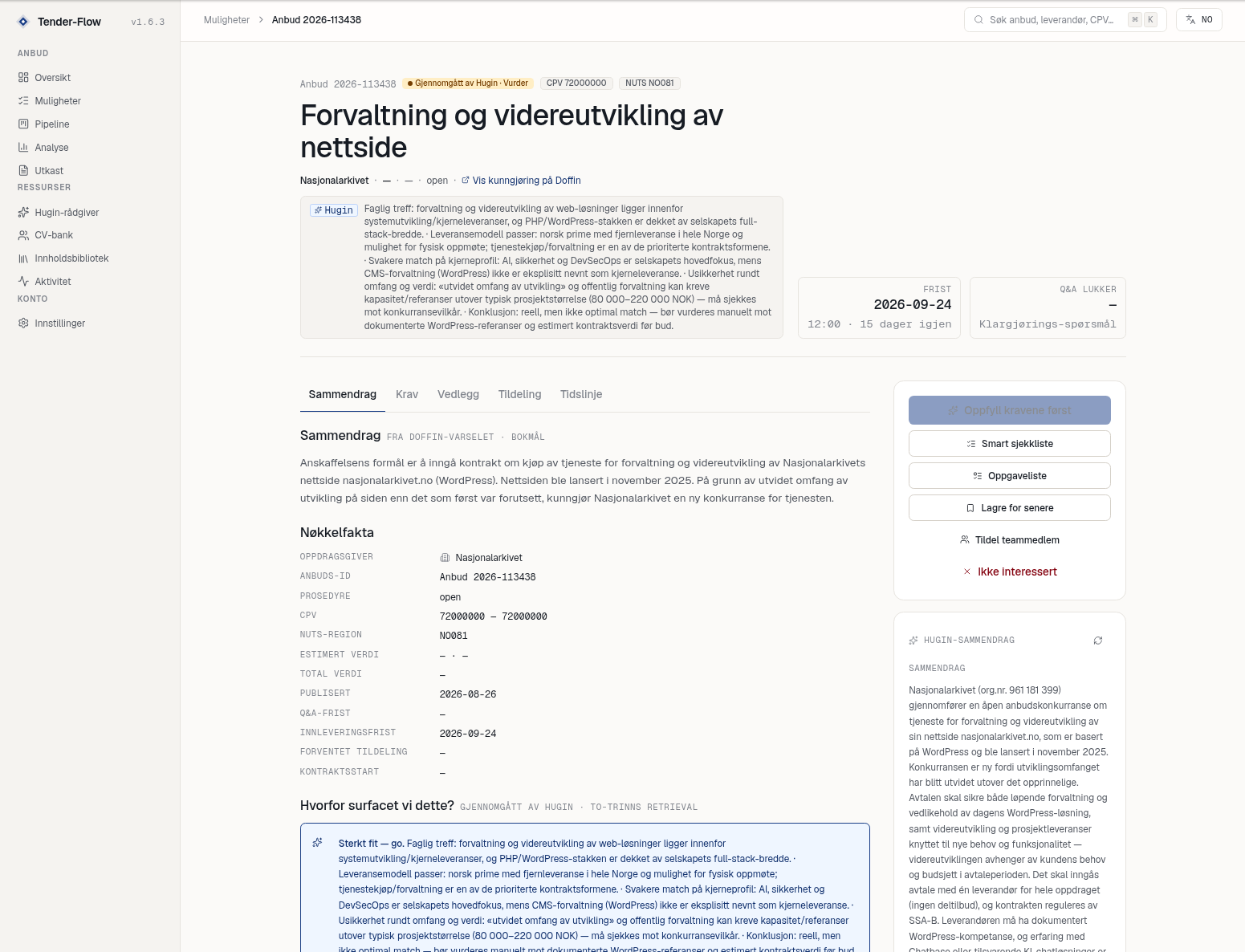
Tender-Flow is a deployed platform that supports work on Norwegian public procurement opportunities through a structured multi-agent workflow. I designed, implemented and deployed the system from the ground up.
The problem it addresses
Tender work combines opportunity discovery, source documents, requirements and information needed to prepare a bid. When those inputs are scattered, people spend time locating context and risk losing the connection between a requirement and the material used to answer it. Tender-Flow brings the working information into one application and organizes agent-assisted steps around the procurement workflow.
My role
I am responsible for the system architecture, implementation and deployment. The work includes connecting the tender process with structured information used during bid preparation and designing the boundaries between automated assistance and responsible human decisions.
How the workflow is bounded
Agents assist with collecting, organizing and presenting information. They do not own the final commercial commitment or the decision to submit a bid. Those decisions remain with the responsible people. This boundary is deliberate: automation should improve access to evidence without silently taking over accountability.
Evidence and limitations
The screenshots on this page show the running application, including opportunity and tender-detail views. The source repository is private. This case study documents the deployed implementation and my role; it does not claim a measured tender win rate or disclose client data. Any evaluation of business impact should use agreed operational measures rather than inferred outcomes.